In the manufacturing world, a perfect prototype is easy to achieve. The real challenge lies in producing 10,000 units where the 10,000th bag is just as high-quality as the first. This is where Quality Control (QC) becomes the backbone of a successful production run. For B2B buyers, understanding the QC process is vital to ensuring that the goods delivered meet brand standards and customer expectations.
At Xinghe (XH), we view quality control not as a final step, but as a continuous process integrated into every minute of production. Here is a look behind the scenes at how we manage quality control during mass production.
The Four Pillars of Bag Manufacturing QC
A robust QC strategy is divided into four critical phases:
1. Pre-Production Inspection (PPI)
Before a single stitch is made, we inspect the "ingredients."
● Checking for color consistency (Lab Dips), water resistance, and tensile strength.
● Ensuring zippers glide smoothly and buckles don't snap under pressure.
● Verifying that the logo application (embroidery, print, etc.) matches the approved sample exactly.
2. During Production Inspection (DUPRO)
Once the assembly line is moving, QC officers perform "inline" checks.
● Checking that the number of stitches per inch meets the technical specifications.
● Ensuring pockets, straps, and logos are perfectly centered and symmetrical.
● Identifying any systemic issues early allows the factory to stop the line and correct the problem before thousands of bags are affected.
3. Final Random Inspection (FRI)
When 100% of the order is finished and at least 80% is packed, a final check is conducted using the AQL (Acceptable Quality Level) standard.
● Testing every zipper, snap, and strap on the sampled bags.
● Looking for loose threads, stains, or scuffs.
● Verifying that the dimensions of the bag match the tech pack within allowed tolerances.
4. Container Loading Check (CLC)
The final step is ensuring the bags are loaded safely.
● Checking that export cartons are strong enough to withstand international shipping.
● Verifying that the correct number of units and colors are being shipped.
Understanding AQL: The Language of Quality
Most professional bag factories use the AQL 2.5/4.0 standard.
● Issues that could harm the user (e.g., a needle left in a bag).
● Issues that make the product unsellable (e.g., a broken zipper or incorrect logo).
● Small aesthetic issues that don't affect function (e.g., a slightly long thread).
The Xinghe (XH) Advantage: A Culture of Precision
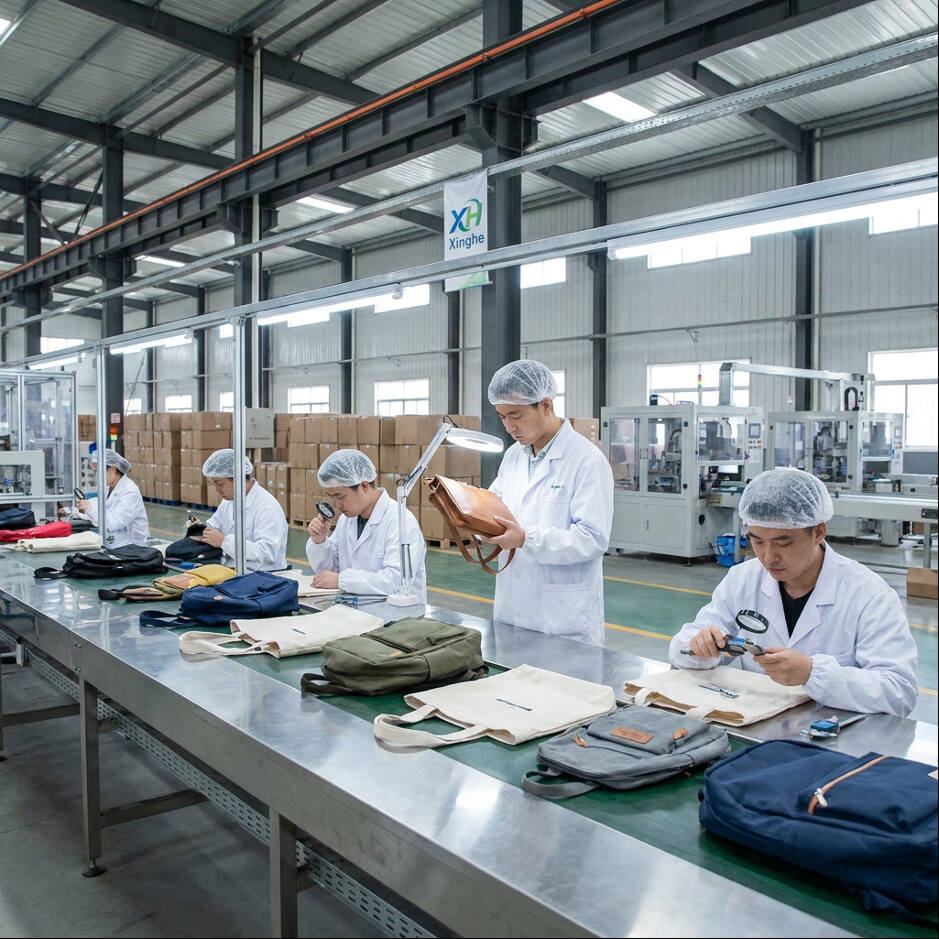
At Xinghe, our clean and organized facility is more than just an aesthetic choice; it’s a functional one. A tidy workspace reduces the risk of dust and stains on the fabric and allows our inspectors to focus on the details.
Our QC team is independent of the production team. This means their only goal is to find errors, not to speed up production. We use advanced testing equipment, including pull-test machines for handles and salt-spray tests for metal hardware to ensure longevity in various climates.
Conclusion
Quality is never an accident; it is the result of high intention, sincere effort, and intelligent execution. By implementing a multi-stage QC process—from raw materials to final loading—we ensure that every bag bearing your brand's logo is a testament to quality and craftsmanship.
Looking for a manufacturing partner who takes quality as seriously as you do? Contact Xinghe today to learn more about our QC protocols.

 EN
EN