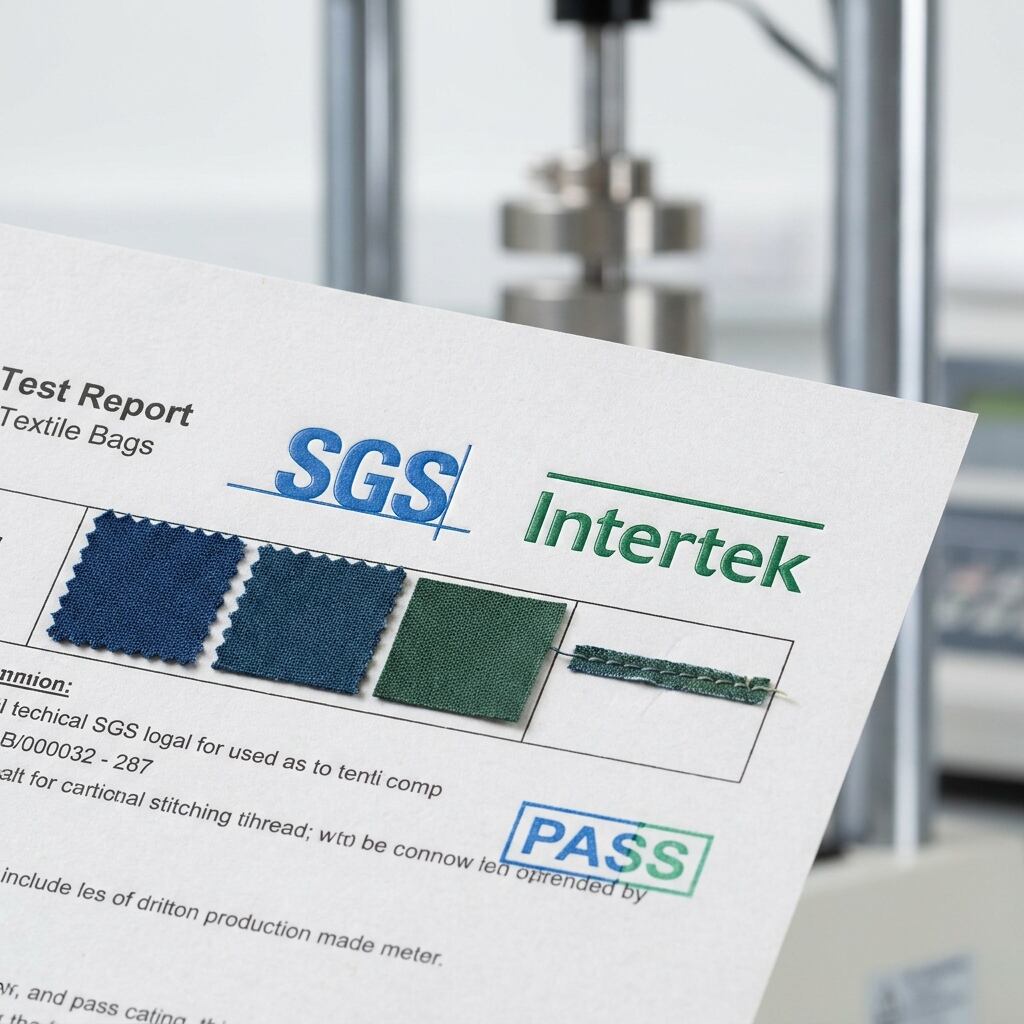
In the global supply chain, trust is the foundation of every successful partnership. However, for B2B buyers managing large-scale bag procurement, "trust" must be backed by "verification." While a factory’s internal Quality Control (QC) is essential, it is third-party lab testing—conducted by world-renowned organizations like SGS, Intertek, and BV—that provides the ultimate objective validation of a product's quality, safety, and performance.
At Xinghe (XH), we embrace third-party testing as a critical component of our Quality Assurance (QA) strategy. We believe that independent verification is the best way to give our clients the peace of mind they need to succeed in their respective markets.
Why Third-Party Testing is Essential for Bags
A bag is a complex assembly of multiple components: fabrics, zippers, buckles, webbings, and linings. Each of these elements can be a point of failure or a source of chemical non-compliance. Third-party testing removes the ambiguity and bias from the evaluation process.
1. Objective Performance Validation
How much weight can a backpack really hold before the straps tear? How many times can a zipper be opened and closed before it fails? Internal tests provide a good indication, but a report from SGS using standardized mechanical testing equipment provides a definitive answer that buyers and retailers can rely on.
2. Chemical and Regulatory Compliance
As discussed in our articles on REACH and FDA standards, chemical safety is non-negotiable. Independent labs specialize in identifying trace amounts of restricted substances that are impossible to detect with the naked eye. An Intertek certificate is a globally recognized "passport" that allows your products to clear customs and enter retail shelves without delay.
3. Protection Against "Quality Fade"
Quality fade is a common issue where a supplier provides a high-quality sample but subtly downgrades materials during mass production. Random batch testing by a third party ensures that the quality of the 10,000th bag is identical to the quality of the approved sample.
Key Tests for Bag Quality Assurance
When Xinghe works with third-party labs, we typically focus on several key performance and safety metrics:
Tensile and Tear Strength
● : Testing the fabric and seams to ensure they can withstand the intended load and daily wear-and-tear.
Colorfastness (Rubbing, Light, and Washing)
● : Ensuring that the bag's color doesn't bleed onto the user’s clothes or fade under the sun.
● : For bags with metal hardware (zippers, d-rings), this test simulates a coastal environment to check for corrosion resistance.
● : Testing for phthalates, lead, cadmium, and other restricted substances under REACH, RoHS, or Prop 65.
● : Critical for bags used in certain industrial environments or for children's products.
The Xinghe (XH) Approach: Full Transparency
At Xinghe, we don’t just "accept" third-party audits; we actively encourage them. We offer our clients several ways to integrate independent testing into their procurement process:
Proactive Material Testing
Before mass production begins, we can send swatches of the raw materials to the lab of your choice. This "pre-approval" stage ensures that we are starting with the right building blocks.
Final Shipment Inspection
Clients can appoint an inspector from SGS or Intertek to visit our facility and perform a random sampling of the finished goods (often based on AQL 2.5/4.0 standards). The inspector evaluates the aesthetics, construction, and packaging of the goods before they leave our factory.
Shared Reports
We maintain a library of recent test reports for our standard materials. This often allows our clients to move faster and save on testing costs by leveraging existing data for proven materials.
The Value of the Blue and Green Logo
Our logo—the blue and green XH mark—represents our commitment to being a "verifiable" supplier. The blue symbolizes the stability and reliability of our production, while the green represents our commitment to safe and sustainable growth. By working with third-party labs, we turn these values into measurable data.
Conclusion
In an era of increasing regulatory scrutiny and consumer expectations, third-party lab testing is no longer a luxury—it is a business necessity. It protects your brand, reduces your risk, and ensures that your customers receive exactly what you promised.
At Xinghe, we are proud of our quality and we are not afraid to have it tested. We invite you to experience the confidence that comes from working with a transparent, verified, and professional bag manufacturer.
Want to verify the quality of your next bag order? Contact Xinghe today to discuss our testing protocols or to request our latest SGS and Intertek reports.

 EN
EN